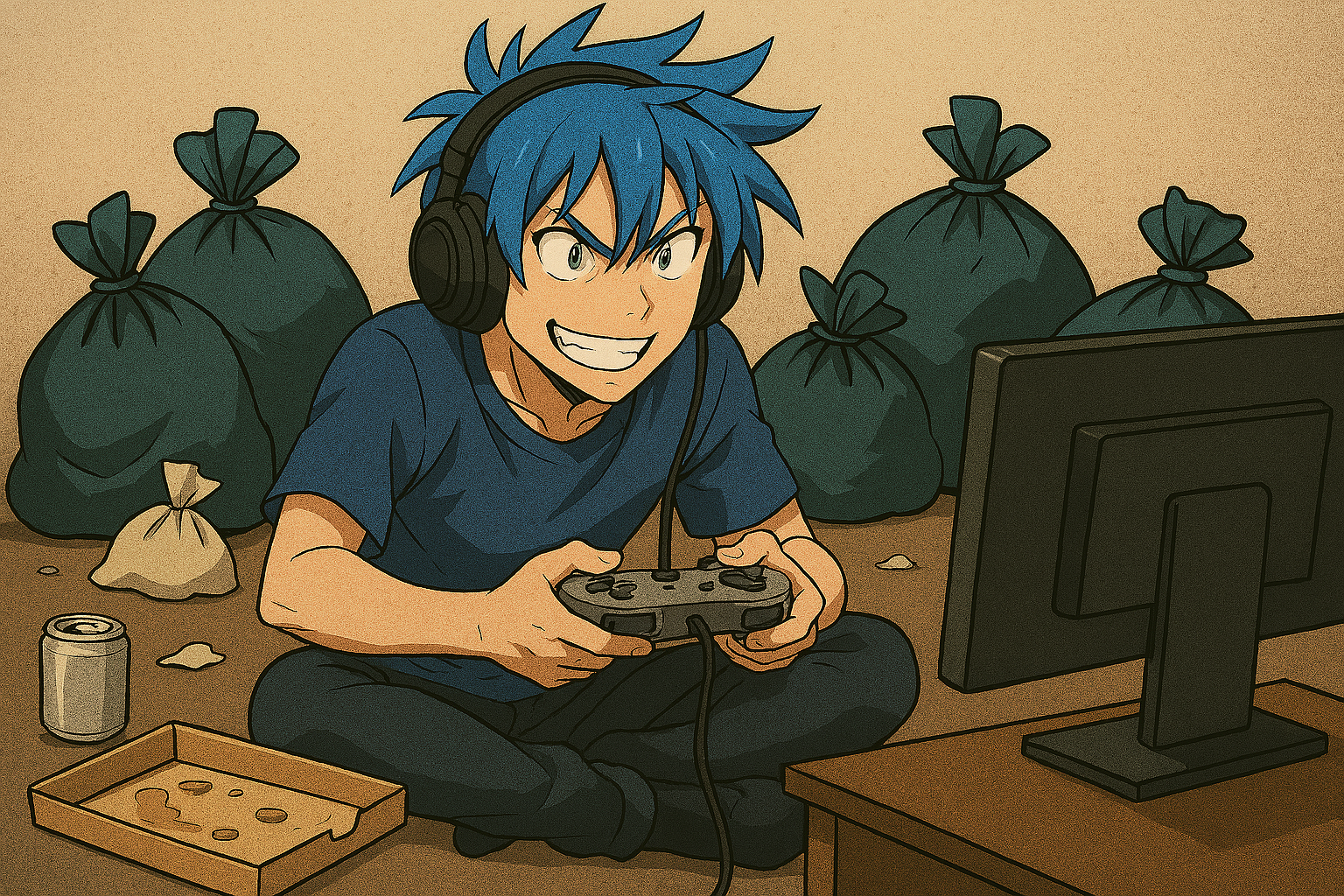
While everyone else was logging into the most popular, most polished, most played games in the world, Sunraku was doing something that made absolutely no sense — he was hunting down the worst games ever made and mastering them.
Not because he had to. Because he chose to.
That single decision — to go where nobody else bothered to go, to grind what nobody else thought was worth grinding — is what made him the most dangerous player in Shangri-La Frontier. Not his reaction speed. Not his build. Not his gear. His mentality. And that mentality? It doesn't just apply to gaming. It applies to everything.
Trash Games Were His Training Arc
Sunraku didn't stumble into Shangri-La Frontier as a casual player looking for something fun to do on a weekend. He arrived as someone who had spent countless hours wrestling with broken mechanics, unfair hitboxes, and games so poorly designed that most players rage quit in the first twenty minutes.
Where everyone else saw garbage, he saw a challenge worth solving.
That's the first lesson. The experiences that seem like a waste of time — the dead-end jobs, the failed projects, the paths that didn't lead where you expected — they're not detours from your story. They're your training arc. Every broken game Sunraku mastered gave him a tool he didn't know he'd need until exactly the moment he needed it.
The question isn't whether your current grind is glamorous. The question is whether you're actually learning from it.
He Never Played the Meta — He Studied It and Then Broke It
Here's what makes Sunraku genuinely fascinating: he wasn't ignorant of the meta. He understood exactly how the game was supposed to be played. He just refused to let that be the ceiling.
Most players follow the meta because it's the safest path to a predictable outcome. Build what everyone else builds. Do what the guides say. Stay inside the lines. It works — but it only gets you as far as everyone else who did the same thing.
Sunraku's refusal to follow the established playbook forced him to develop solutions that nobody had a counter for. When he faced Wethermon the Tombguard — a boss so brutally designed that the entire player base had essentially given up on it — he didn't Google the strategy. He improvised one in real time, pulling from every unconventional instinct he'd sharpened on games nobody else had bothered to learn.
In real life, the meta is everywhere. It's the career path you're "supposed" to take, the timeline you're "supposed" to follow, the way success is "supposed" to look. And it works — for the people it works for. But the people who build something truly their own are almost always the ones who studied the rules carefully enough to know exactly which ones were worth breaking.
Adaptability Was His Real Stat
If you watched Shangri-La Frontier closely, you noticed something. Sunraku didn't always have a plan. Half the time he was making it up as the situation changed around him, reading patterns mid-battle and adjusting faster than most players could think.
That's not recklessness. That's a skill he built deliberately — by repeatedly putting himself in situations where the script ran out and he had no choice but to improvise.
Rigid strategies fail the moment reality stops cooperating with them. And reality stops cooperating constantly. The project pivots. The plan falls apart. The boss does something the guide didn't mention. The people who thrive in those moments aren't the ones with the best plan — they're the ones who trained themselves to function without one.
Build your adaptability like Sunraku built his. Deliberately. By going off script on purpose, early and often, so that when the situation forces it, your instinct is already sharpened and ready.
The Grind Nobody Saw
There's a version of Sunraku that most people only see — the one who shows up and does something incredible that nobody else can replicate. What's easy to miss is the mountain of invisible hours behind that moment. The obscure games mastered alone. The mechanics studied when nobody was watching. The failures that never made it into anyone's highlight reel.
That gap — between the visible result and the invisible work — is where most people give up. Because the grind that nobody sees doesn't feel like progress. It feels like spinning your wheels in a game that might not even be worth playing.
But that's exactly where the mentality is built. In the quiet, unglamorous, unwitnessed hours of becoming someone who is ready when the moment arrives.
Your daily quests matter even when nobody is watching the log. It isn't about praise, it's about pushing past your own limits.
The Trash Game Mentality in Practice
So what does it actually look like to run Sunraku's strategy in real life?
It looks like taking the unconventional opportunity seriously when everyone else is chasing the same obvious path. It looks like extracting lessons from the experiences that didn't go according to plan instead of writing them off. It looks like studying the rules of your field deeply enough that you can spot exactly where they're breakable. It looks like staying loose when the plan changes — because you trained for improvisation, not just execution.
It looks like treating your life less like a game you're trying to win on the first try and more like a library of trash games you're trying to master one by one.
The meta is crowded. The unconventional path has room.
Sunraku didn't become the most dangerous player in Shangri-La Frontier by doing what everyone else did. He got there by being the only person who showed up having done what nobody else bothered to do.
Your next level is on the other side of the grind nobody's watching.
Go install the trash game.